

ENT Fellowship in Delhi
July 6, 2026
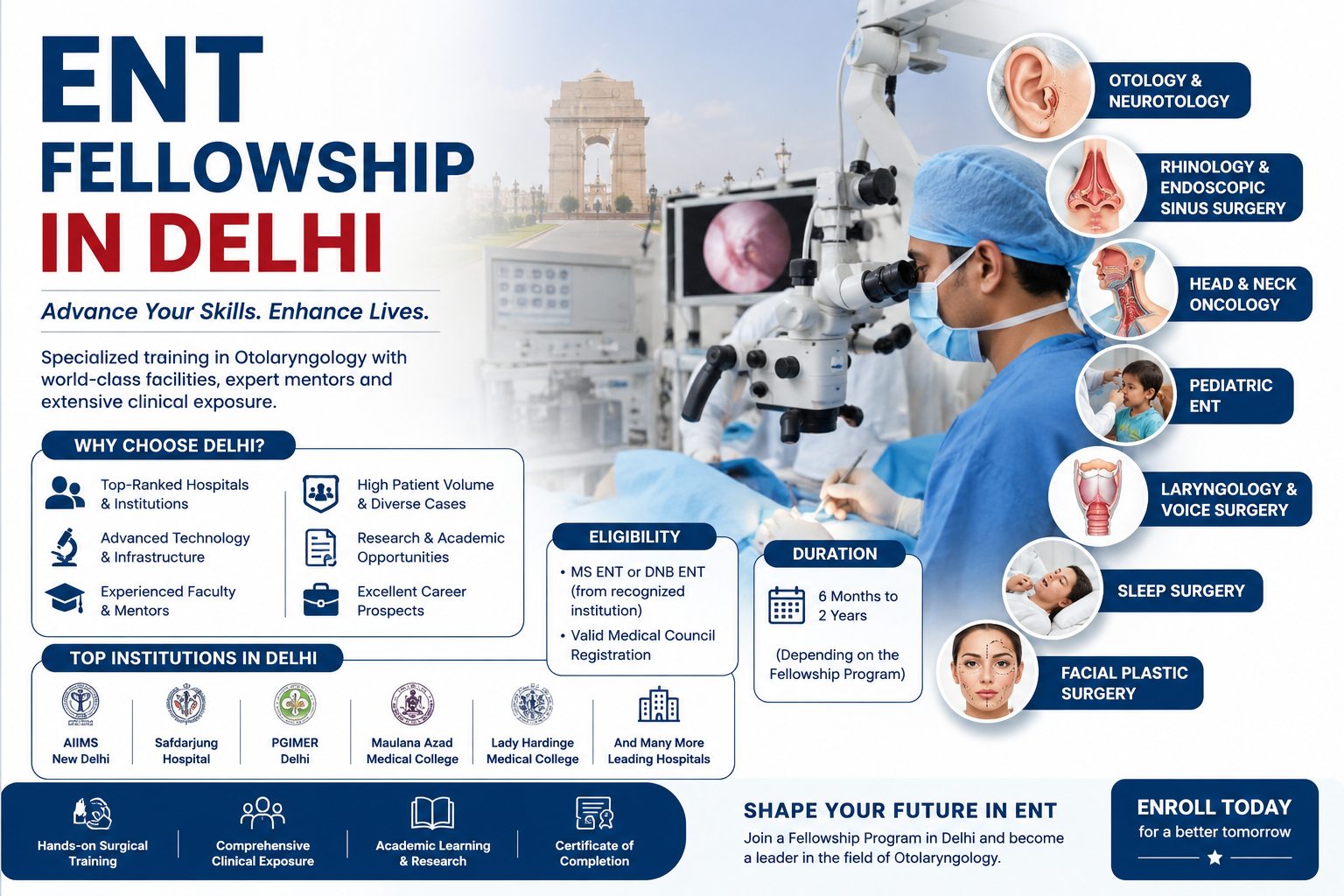
Delhi is one of India’s leading destinations for advanced medical education and super-specialty training. For ENT (Ear, Nose, and Throat) surgeons who wish to enhance their clinical skills, gain exposure to complex cases, and specialize in a particular area of otolaryngology, pursuing an ENT fellowship in Delhi can be a career-defining decision.
Delhi is home to some of India’s most prestigious government hospitals, private healthcare institutions, teaching hospitals, and research centers. These institutions provide extensive exposure to high patient volumes, cutting-edge surgical technologies, multidisciplinary healthcare teams, and internationally recognized faculty.
Whether you are interested in otology, neurotology, rhinology, skull base surgery, head and neck oncology, cochlear implantation, pediatric ENT, laryngology, sleep surgery, or facial plastic surgery, Delhi offers fellowship opportunities across almost every subspecialty.
This comprehensive guide covers everything you need to know about ENT fellowships in Delhi, including eligibility, fellowship types, institutions, curriculum, duration, admission process, career opportunities, salary expectations, and tips for choosing the right program.
What is an ENT Fellowship?
An ENT fellowship is an advanced training program pursued after completing MS ENT or DNB ENT. It focuses on developing expertise in a specific subspecialty of otolaryngology through intensive clinical practice, surgical exposure, academic learning, and research.
Unlike residency, fellowship training is highly specialized and emphasizes independent surgical decision-making, advanced procedures, and evidence-based patient care.
Why Choose Delhi for ENT Fellowship?
Delhi has become a preferred destination for fellowship training due to several advantages.
1. High Patient Volume
Delhi receives patients from across North India, providing fellows exposure to:
- Rare ENT disorders
- Complex surgical cases
- Advanced cancer surgeries
- Pediatric ENT conditions
- Trauma cases
- Revision surgeries
High patient turnover ensures fellows develop confidence through extensive hands-on experience.
2. Renowned Medical Institutions
Delhi houses several nationally recognized hospitals known for excellence in ENT education and patient care.
Examples include:
- AIIMS
- Safdarjung Hospital
- PGIMER Dr. Ram Manohar Lohia Hospital
- Lady Hardinge Medical College
- Maulana Azad Medical College
- Army Hospital (Research & Referral)
- Indraprastha Apollo Hospital
- Max Healthcare
- BLK-Max Super Speciality Hospital
- Sir Ganga Ram Hospital
- Fortis Hospitals
Each institution has its own strengths depending on the fellowship specialization.
3. Experienced Faculty
Many fellowship programs are mentored by internationally trained ENT surgeons who have expertise in:
- Skull base surgery
- Cochlear implants
- Endoscopic sinus surgery
- Robotic surgery
- Head and neck cancer
- Micro-ear surgery
Learning directly from experienced mentors significantly improves surgical outcomes and clinical judgment.
4. Advanced Technology
Modern fellowship centers in Delhi provide access to:
- Surgical microscopes
- Endoscopes
- Coblation systems
- LASER surgery
- Navigation-guided sinus surgery
- Cochlear implant technology
- Robotic surgical systems
- High-definition imaging
- Intraoperative nerve monitoring
Exposure to advanced equipment prepares fellows for modern ENT practice.
5. Research Opportunities
Most major institutions encourage fellows to:
- Publish scientific papers
- Present at conferences
- Conduct clinical research
- Participate in multicenter studies
- Write review articles
- Contribute to international journals
Research experience strengthens academic careers.
Types of ENT Fellowships Available in Delhi
Delhi offers fellowships in multiple ENT subspecialties.
Otology and Neurotology
This fellowship focuses on diseases of the ear and hearing.
Training includes:
- Tympanoplasty
- Mastoidectomy
- Ossiculoplasty
- Cochlear implantation
- Stapedotomy
- Lateral skull base surgery
- Vertigo management
- Facial nerve disorders
Ideal for surgeons interested in hearing restoration.
Rhinology and Endoscopic Sinus Surgery
This specialization covers:
- Functional Endoscopic Sinus Surgery (FESS)
- Nasal polyps
- Chronic sinusitis
- CSF leak repair
- Septoplasty
- Turbinate surgery
- Image-guided surgery
- Skull base approaches
Growing demand has made rhinology one of the fastest-expanding ENT specialties.
Head and Neck Oncology
Focuses on:
- Oral cancers
- Laryngeal cancers
- Thyroid surgery
- Salivary gland tumors
- Neck dissection
- Reconstruction
- Free flap surgery
- Multidisciplinary cancer management
Fellows work closely with oncologists, plastic surgeons, and radiation specialists.
Laryngology and Voice Surgery
Training includes:
- Voice disorders
- Microlaryngeal surgery
- Vocal cord paralysis
- Airway disorders
- Laser surgery
- Speech rehabilitation
Suitable for those interested in professional voice care.
Pediatric ENT
Focus areas include:
- Congenital airway anomalies
- Pediatric hearing loss
- Cochlear implants
- Tonsil surgery
- Adenoidectomy
- Pediatric airway reconstruction
- Foreign body removal
Pediatric fellowships require patience and multidisciplinary coordination.
Sleep Surgery
Sleep medicine fellowships involve:
- Obstructive Sleep Apnea (OSA)
- Drug-Induced Sleep Endoscopy
- Tongue-base surgery
- Palatal surgery
- Airway reconstruction
- CPAP alternatives
This field is rapidly growing in India.
Facial Plastic Surgery
Training includes:
- Rhinoplasty
- Septorhinoplasty
- Facial trauma
- Scar revision
- Cosmetic procedures
- Facial nerve reanimation
Combines functional and aesthetic surgery.
Skull Base Surgery
Highly specialized training involving:
- Endoscopic skull base surgery
- Pituitary surgery
- CSF leak repair
- Tumor removal
- Multidisciplinary neurosurgical collaboration
One of the most technically demanding ENT fellowships.
Eligibility Criteria
Most fellowship programs require:
- MS ENT
- DNB ENT
- Medical Council registration
- Good academic record
- Surgical experience
- Recommendation letters (in some programs)
- Interview performance
Certain private fellowships may also consider international graduates with appropriate registration.
Fellowship Duration
Most ENT fellowships last:
- 6 months
- 1 year
- 18 months
- 2 years (advanced programs)
Longer fellowships usually offer greater operative independence and research exposure.
Admission Process
The selection process generally includes:
Application Submission
Applicants submit:
- Curriculum Vitae
- Educational certificates
- Medical registration
- Publications
- Statement of purpose
Screening
Institutions shortlist candidates based on academic achievements and clinical experience.
Interview
Interviews assess:
- Clinical knowledge
- Surgical understanding
- Research interest
- Communication skills
- Career goals
Some centers may conduct practical or case-based assessments.
Fellowship Curriculum
Training usually includes:
Clinical outpatient services
Emergency ENT management
Ward responsibilities
Advanced surgical procedures
Operation theatre assistance
Independent surgeries (under supervision)
Radiology interpretation
Pathology discussions
Audiology
Speech therapy
Vestibular assessment
Journal clubs
Seminars
Mortality meetings
Case presentations
Research methodology
Dissertation or publication
Surgical Exposure
Depending on the fellowship, fellows may perform:
Microscopic ear surgery
Endoscopic sinus surgery
Thyroidectomy
Parotidectomy
Neck dissection
Laser laryngeal surgery
Airway reconstruction
Cochlear implantation
Facial nerve decompression
Septorhinoplasty
Tonsillectomy
Adenoidectomy
Skull base procedures
Skills Developed During Fellowship
By the end of training, fellows generally develop:
Clinical decision-making
Independent surgical planning
Advanced microsurgical techniques
Endoscopic surgical skills
Patient counseling
Multidisciplinary coordination
Research methodology
Medical ethics
Leadership
Teaching abilities
Research and Academic Activities
Delhi fellowship programs actively encourage:
Clinical audits
Case reports
Original research
Poster presentations
Conference participation
Book chapter writing
Journal publications
Teaching undergraduate students
Many fellows present their work at national and international conferences.
Stipend During Fellowship
Stipends vary according to the institution.
Approximate monthly stipend:
- Government hospitals: ₹70,000–₹1,20,000
- Private hospitals: ₹50,000–₹1,50,000
- Corporate fellowships: May include additional benefits such as accommodation, meals, insurance, or conference funding.
Some observerships may not provide a stipend.
Career Opportunities After Fellowship
After completing an ENT fellowship in Delhi, career options include:
Consultant ENT Surgeon
Join corporate hospitals, multispecialty hospitals, or specialty centers.
Academic Faculty
Become an Assistant Professor or Lecturer in medical colleges.
Private Practice
Establish an independent clinic with expertise in a subspecialty.
Cochlear Implant Surgeon
Specialize in hearing restoration and implant surgery.
Head and Neck Cancer Specialist
Work in oncology hospitals or comprehensive cancer centers.
International Opportunities
Advanced fellowship training can strengthen applications for positions abroad, subject to local licensing requirements.
Research and Innovation
Contribute to clinical trials, device development, and evidence-based ENT practice.
Advantages of Pursuing Fellowship in Delhi
- Exposure to diverse patient populations
- Advanced surgical technologies
- Experienced mentors
- Strong academic environment
- High surgical volume
- Better networking opportunities
- National and international conference exposure
- Improved career prospects
- Enhanced confidence in complex procedures
Challenges
While fellowship training is rewarding, it can also be demanding.
Common challenges include:
- Long working hours
- High patient load
- Intensive surgical schedule
- Academic responsibilities
- Research deadlines
- Competitive environment
However, these experiences contribute significantly to professional growth.
Tips for Choosing the Right Fellowship
When selecting a fellowship, consider:
- Faculty expertise
- Surgical case volume
- Hands-on opportunities
- Research support
- Infrastructure
- Alumni outcomes
- Accreditation
- Career goals
- Fellowship duration
- Availability of advanced technology
Visiting the institution or speaking with former fellows can provide valuable insights.
Documents Required
Commonly required documents include:
- MBBS degree certificate
- MS ENT or DNB ENT certificate
- Medical registration certificate
- Internship completion certificate
- Updated CV
- Passport-size photographs
- Identity proof
- Recommendation letters (if required)
- Statement of purpose
- Research publications (if applicable)
Future Scope of ENT Fellowships
The demand for fellowship-trained ENT surgeons continues to grow due to:
- Increasing prevalence of hearing disorders
- Rising incidence of head and neck cancers
- Greater awareness of sleep apnea
- Expansion of cochlear implant programs
- Advances in minimally invasive surgery
- Growing need for subspecialty expertise in tertiary care hospitals
As healthcare evolves, fellowship-trained specialists are increasingly preferred for complex procedures and leadership roles in academic and corporate healthcare settings.
Conclusion
An ENT fellowship in Delhi offers an exceptional opportunity to refine surgical expertise, deepen clinical knowledge, and build a successful career in otolaryngology. With access to world-class institutions, experienced mentors, advanced technology, and a broad spectrum of clinical cases, Delhi provides an ideal environment for super-specialty training.
Whether your goal is to become a leading consultant, academician, researcher, or subspecialist in areas such as otology, rhinology, head and neck oncology, pediatric ENT, skull base surgery, or facial plastic surgery, a well-structured fellowship in Delhi can significantly enhance your professional journey. By carefully evaluating the fellowship curriculum, faculty, surgical exposure, research opportunities, and career outcomes, you can choose a program that aligns with your long-term aspirations and prepares you to deliver the highest standards of patient care.
- Previous: Cochlear Implant Surgery in Lohardaga
- Next: ENT Fellowship in Mumbai
- साइनस का दर्द और सर्जरी: Satkriti Hospital में कितना खर्च आता है और इलाज कैसे होता है
- वर्टिगो (चक्कर आना) का कारण, लक्षण और इलाज: सत्कृति हॉस्पिटल, वाराणसी
- Top 10 ENT Specialists in Varanasi 2026: How to Choose the Right ENT Doctor for You
By satkriti-admin
Comment
Your email address will not be published. Required fields are marked *